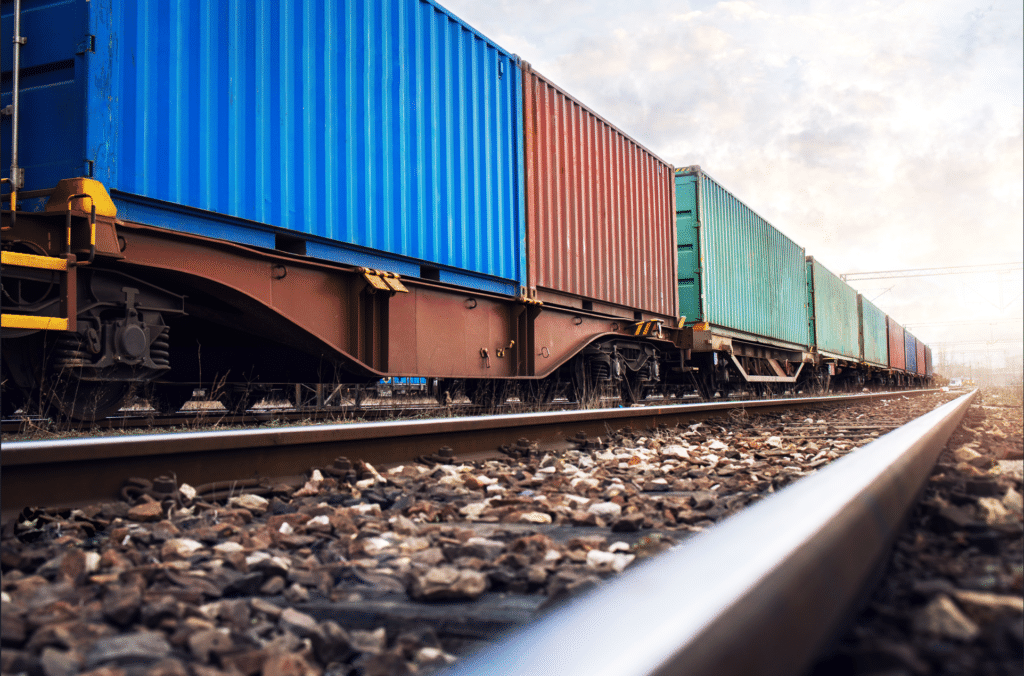
European rail sector warns against competitive distortions from cross-border 44-tonne trucks
Six European rail and intermodal transport associations are calling on EU policymakers to maintain a 40-tonne limit for conventional trucks in cross-border road-only freight transport. AERRL, CER, ERFA, UIP, UIRR and UNIFE warn that allowing heavier conventional trucks to circulate more widely across borders would distort competition with rail and combined transport, undermining efforts to strengthen European rail freight competitiveness.
The call comes as the European Parliament, Council and European Commission negotiate the revision of the Weights and Dimensions Directive (COM(2023) 445), which sets limits on the size and weight of heavy-duty road vehicles. Policymakers are considering, among other issues, additional weight allowances for zero-emission trucks, the cross-border use of heavier and longer vehicles, and provisions for intermodal transport.
The potential impact on competition between transport modes is substantial. A 2024 joint study commissioned by CER, UIRR, ERFA, UIC and UIP and conducted by d-fine found that increasing truck weights from 40 to 44 tonnes could lower road transport costs by approximately 7% to 25% per tonne or cubic metre, giving road transport an additional cost advantage over rail and combined transport. Looking at the broader measures proposed in the revision, including longer and heavier vehicles, the study identified a potential shift of up to 21% of rail freight volumes and 16% of combined transport volumes to road.
The study estimated that this could mean around10 million additional truck journeys per year on average, generating up to 6.6 million tonnes of additional CO₂ emissions, more than €1.15 billion in additional annual road maintenance costs, while external costs could be three times higher due to accidents, climate impacts, noise and congestion. It also found that accidents involving 44-tonne vehicles tend to have more severe consequences, primarily because of their higher weight.
Against this background, the six associations call for today’s 40-tonne limit to be maintained for conventional trucks in cross-border road-only transport. At the same time, they support preserving higher weight allowances for intermodal transport and proportionate additional allowances for zero-emission vehicles to compensate for the additional weight of zero-emission technology. This approach would support the decarbonisation of road freight without creating a new competitive disadvantage for rail and combined transport.
The associations also underline the importance of advancing the revision of the Combined Transport Directive, which offers an important opportunity to improve the conditions for efficient road-rail freight operations. A coherent approach to the two files is needed to ensure that EU rules support rather than undermine the shift towards more sustainable freight transport in Europe.
Ahead of an upcoming trilogue meeting between the European Parliament, Council and European Commission, AERRL, CER, ERFA, UIP, UIRR and UNIFE urge negotiators to work towards a balanced agreement that preserves fair competition between transport modes and avoids shifting freight from rail to road.
Quotes:
Alberto Mazzola, CER Executive Director: „Czech Transport Minister Ivan Bednárik recently spearheaded an initiative to strengthen European rail freight competitiveness, backed by several Member States. Railways hope this important political signal will resonate in ongoing EU legislative negotiations. Maintaining the 40-tonne limit for conventional trucks in cross-border road-only transport is essential to safeguarding fair competition between transport modes. EU legislation must provide a consistent framework for the market, support investment in rail freight and enable the transition towards a more sustainable and competitive European transport system.“
Enno Wiebe, UNIFE Director General: “As part of the railway ecosystem, Europe’s rail supply industry has a vested interest in seeing all its partners strong, healthy and competitive. Only a robust rail sector can deliver a sustainable and competitive rail freight system. It is crucial that policymakers take rail freight seriously and ensure a level playing field between transport modes. We cannot keep calling for a shift to rail while undermining its competitiveness through the back door. It is time to give rail freight the position it deserves in Europe’s transport system.”
Gilles Peterhans, UIP Secretary General: “The revision of the Weights and Dimensions Directive has a clear purpose: to support the electrification of road transport. It should remain focused on that objective and not become a tool to tip the competitive balance between modes of transport, at a time when Europe needs every mode to contribute to its decarbonisation goals. What matters most is that road and rail assets and operations remain technically and operationally compatible, because interoperability between modes is what makes intermodal transport work."
Ralf-Charley Schultze, UIRR Director General: “The revision of the Weights and Dimensions Directive must not undermine Europe’s road infrastructure or public safety. Any increase in maximum vehicle weights must be subject to strict conditions and rigorous sound impact assessments, ensuring that it neither disproportionally increases road infrastructure costs, nor endangers the safety of all road users. These safeguards, together with the compatibility of the road with the other modes of transport, must remain non-negotiable.”
Maria Price, ERFA Secretary General: “Bigger trucks across borders mean less freight on rail, more emissions, more congestion and more road casualties. Moreover, this policy will lead to a reverse modal shift and Europe cannot afford it. Do not legislate against rail freight!.”
Carole Coune, AERRL Secretary General: “The European Union is committed to reducing CO2 emissions from transport by 90% by 2050. At AERRL, we are convinced that the modal shift from freight and passengers transportation to rail is the most realistic and effective lever to achieve this objective. Any measure that would create a new competitive disadvantage for rail and combined transport would set back efforts to reduce CO₂ emissions. As major investors in modern rail rolling stock, we would find such a policy direction difficult to understand.”