Rail Goes 5G: European Rail Launches Major FRMCS Introduction Test
Europe’s transition to 5G-Mission Critical based rail communications system (FRMCS) is approaching its System introduction point, thanks to Europe’s Rail Joint Undertaking’s flagship project.
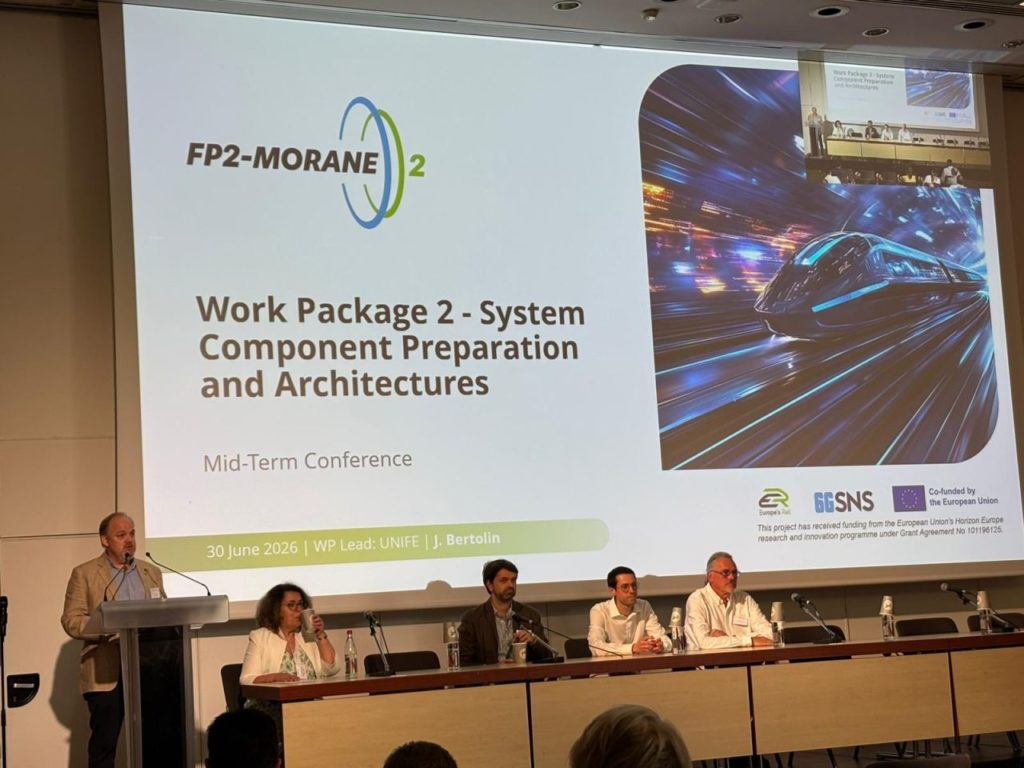
At today’s FP2-MORANE-2 Mid-Term Conference, the consortium showed off plans to begin FRMCS testing across three laboratories. This laboratory phase will mark the first comprehensive stress-test of the railway new telecommunication system, which will will replace the aging GSM-R standard.
Engineers are currently integrating critical FRMCS equipment —including cab radios, dispatcher systems, 5G networks, Mission Critical, interworking with GSM-R Functions - testing voice communication, Railway Emergency Call, and also ETCS, automated train operation (ATO) and TCMS— to ensure hardware from different vendors can "talk" to one another across borders, in a fully compliant way with the FRMCS Specifications.
This represents a key step toward ensuring operational continuity, interoperability and resilience for the future European railway communication ecosystem.
Crucially, the consortium has published the first unified set of system test cases, based on the FRMCS v2.2 specifications, which cover onboard and trackside systems, and FRMCS interfaces. These protocols provide the industry with a standardised blueprint for how FRMCS hardware needs to perform under realistic railway conditions.
Laboratory activities are progressing across the three main integration labs hosted by Ericsson, Nokia and Kontron. These labs will validate FRMCS connectivity, interworking with GSM-R, and inter-vendor interoperability ahead of field testing.
In parallel, infrastructure preparations for field trials are advancing across Europe. ADIF, DB InfraGO, ProRail and Trafikverket are preparing railway lines by building masts, installing onboard systems and FRMCS 5G Mission Critical equipments to support operational testing from 2027 onwards.
These activities include integration of onboard equipment, testing of the 5G networks including for cross-border scenarios.
The project is executed by a strong and multidisciplinary sector consortium led by UIC and composed of UNIFE (representing the European Rail Supply Industry), various railways (ADIF, BaneDanmark, Bane Nor, Deutsche Bahn, Infrabel, Network Rail, ProRail, RFI, SBB, Trafikverket and Väylävirasto), European rail suppliers (Alstom, CAF, Ericsson, Eviden, Frequentis, Funkwerk, Hitachi Rail GTS, Kontron, Nokia, RideOnTrack, Siemens, Teltronic and Viavi Solutions) and two mobile network operators (KPN and Telia).
The 34-month major project will test and confirm the FRMCS specifications, designed to offer connectivity and specific capabilities across Europe’s busiest railway lines, ensuring that these specifications are ready to be incorporated in future revisions of Technical Specifications for Interoperability (TSIs).
By supporting the migration toward a harmonised European 5G railway communication framework, FP2-MORANE-2 contributes directly to the digital transformation, competitiveness and sustainability objectives of the European rail sector.
FP2-MORANE-2 continues to ensure close cooperation with rail regulatory and standardisation bodies, particularly the European Union Agency for Railways.
François Davenne, UIC Director General highlighted:
“FRMCS is a strategic enabler for the future of rail mobility in Europe. Through FP2-MORANE-2, the railway community is demonstrating its collective capacity to deliver interoperable, future-proof and resilient communication systems that will strengthen both operational performance and the attractiveness of rail transport.”
Enno Wiebe, Director General of UNIFE stated: “For the first time, the entire European railway sector has truly pulled together to lay the foundations for the telecommunications system of the railway of the future.”
“We are now putting these first results through the necessary stress test - and there is no time to lose. Europe must accelerate the deployment of FRMCS as quickly as possible. This is an important milestone, but the largest and most demanding part of the journey still lies ahead.